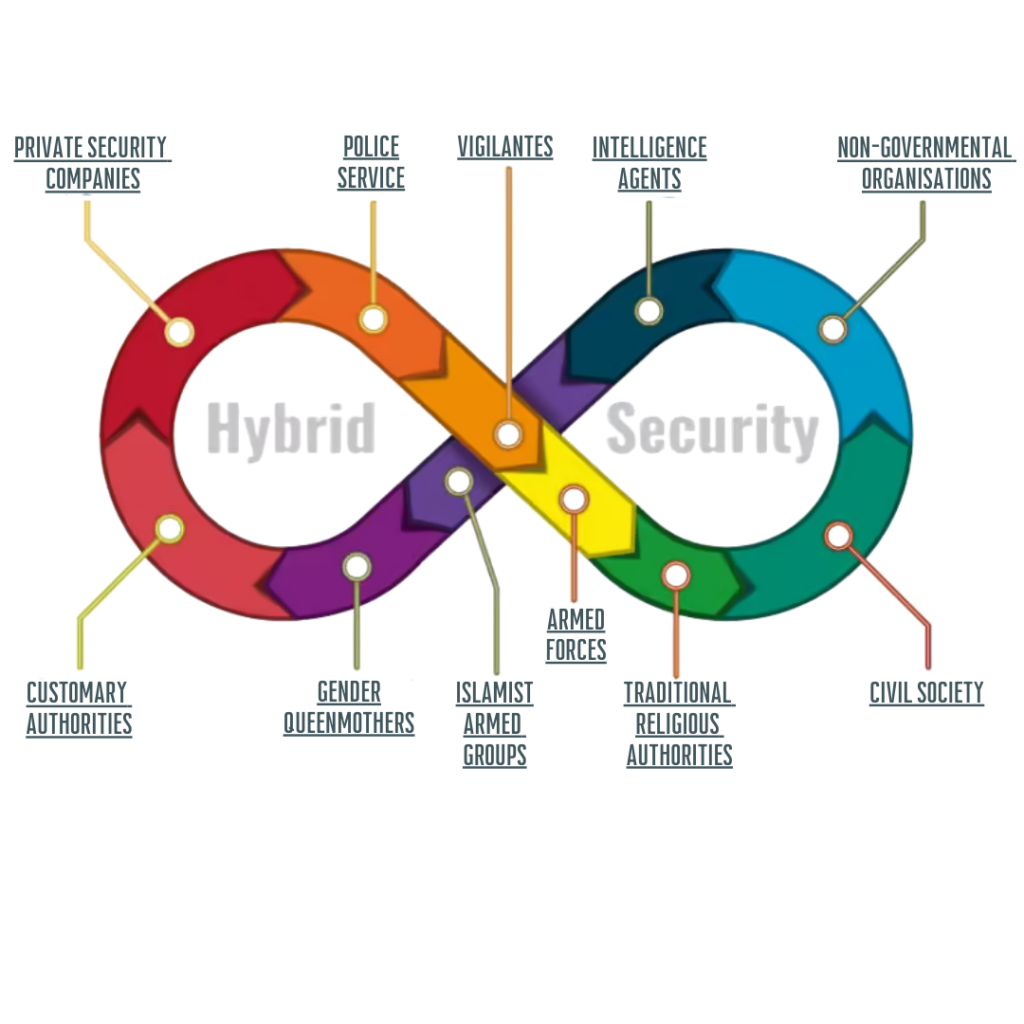
Ghana’s security governance is structured through a plural and hybrid system in which formal state institutions coexist with customary, community-based, and religious authorities.
While defence, policing, intelligence, and electoral security are formally assigned to state bodies under constitutional and legislative oversight, the provision of order and conflict management in practice also relies on locally embedded institutions and informal mechanisms.
Formal actors include the Ghana Armed Forces, the Ghana Police Service, intelligence agencies, and specialized coordination structures responsible for internal security, border control, elections, and the prevention and countering of violent extremism However, even within these institutions, governance is not exclusively rule-based: everyday regulation combines formal directives with informal norms, seniority systems, and socio-cultural practices that shape authority and power dynamics.
Alongside these statutory bodies, a wide range of non-state and customary actors contribute directly to security provision. Chieftaincy institutions mobilize warrior chiefs, Asafo companies, hunters, and community-based vigilante formations to protect communities, enforce norms, and address local threats. Their legitimacy and influence go beyond security and extend to justice, as customary courts, including those led by Akan Queenmothers, adjudicate domestic, land, succession, and market disputes through mediation and restorative justice approaches.
Security governance therefore operates through interaction rather than separation. State agencies frequently rely on local authorities for mediation, information, and community access, while customary and religious actors complement and work with formal institutions when legal authority is required. The result is a layered system in which formal and informal actors jointly shape everyday practices of protection, dispute resolution, and social order.