Police
ORIGINS AND CONTEXT
The origins of the Ghana Police Service lie in colonial rule. Established primarily to protect colonial economic interests, the early police force functioned as an instrument of control rather than public service.
In Ghana, formal policing structures coexist with informal systems of authority, including traditional leaders and community-based mechanisms. This overlap complicates accountability and influences how police officers interpret their roles.
OPERATIONAL ROLES AND RESPONSIBILITIES
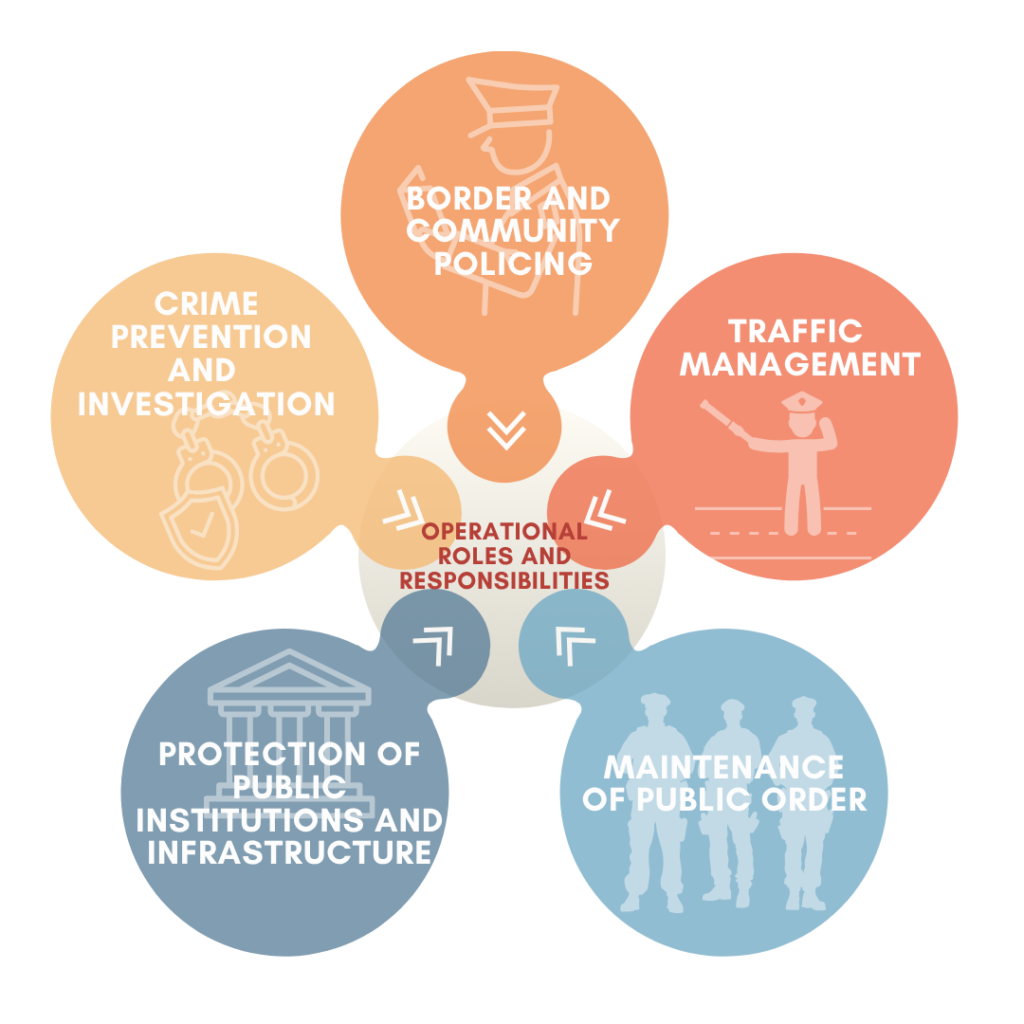
The Ghana Police Service plays a central role in internal security and governance, with responsibilities including crime prevention and investigation, maintenance of public order, traffic management, border and community policing, and protection of public institutions and infrastructure.
The police also work closely with other security agencies such as the Ghana Armed Forces, immigration services and intelligence agencies to ensure national security coordination.
RECRUITMENT, TRAINING AND STRUCTURAL CHALLENGES
Recruitment into the Ghana Police Service is officially merit-based, requiring educational qualifications and passing standardised procedures. However, in practice, the process is often characterised by political patronage (“protocol lists”), informal networks (“connections”), and alleged bribery. Some recruits report paying substantial sums to secure positions, raising concerns about the integrity of the recruitment process.
Training institutions are distributed across the country, including Accra, Kumasi, and Ho. While training aims to instil discipline and professionalism, challenges persist, including inadequate logistics, political interference in the recruitment process during training and in posting decisions, outdated curricula, and limited emphasis on ethics and accountability.
INSTITUTIONAL CULTURE AND VARIATION
Officers in elite units in Accra reported strict discipline, while officers in remote areas described relaxed oversight and informal practices. These variations shape how recruits perceive and respond to corruption, reinforcing the need for context-specific reforms.
EXPOSURE TO CORRUPTION
After deployment, recruits encountered multiple forms of corruption, including bribe-taking at checkpoints, manipulation of evidence, and preferential treatment based on connections.
The most common forms include :
- bribery during traffic stops,
- informal payments to avoid sanctions,
- and payments to accelerate administrative or investigative processes.
These reflect structural issues linked to enforcement capacity and accountability mechanisms. These practices tend to undermine public confidence in law enforcement, weaken the effectiveness of crime control and contribute to broader concerns about institutional integrity.
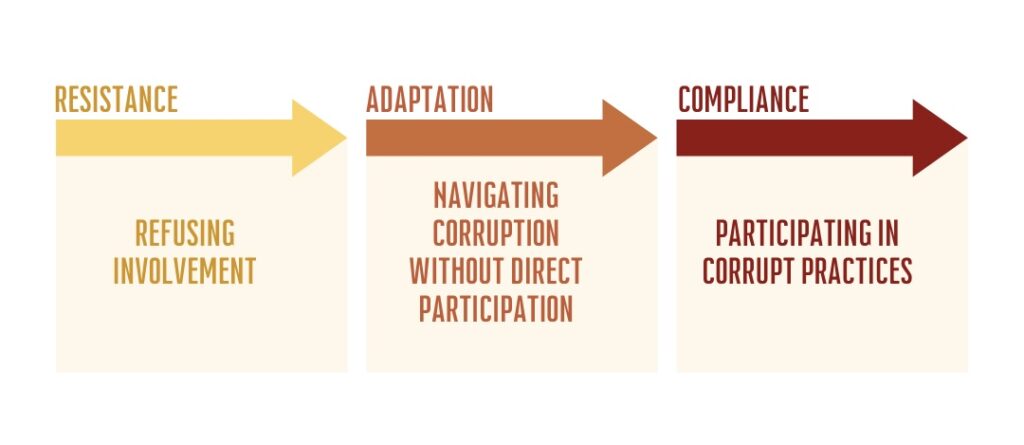
Exposure varied depending on posting, with urban units experiencing stricter supervision and rural postings offering greater discretion. Recruits adopted different strategies, ranging from compliance, resistance and adaptation. However, over time time, many recruits shifted from initial resistance to pragmatic acceptance, highlighting the powerful influence of organisational culture.
Police corruption remains a persistent challenge in Ghana, undermining public trust and democratic governance. In his PhD research, ASSN’s Ghana police expert (Emmanuel Sowatey) demonstrates that police recruits are a critical entry point for understanding and addressing this problem.
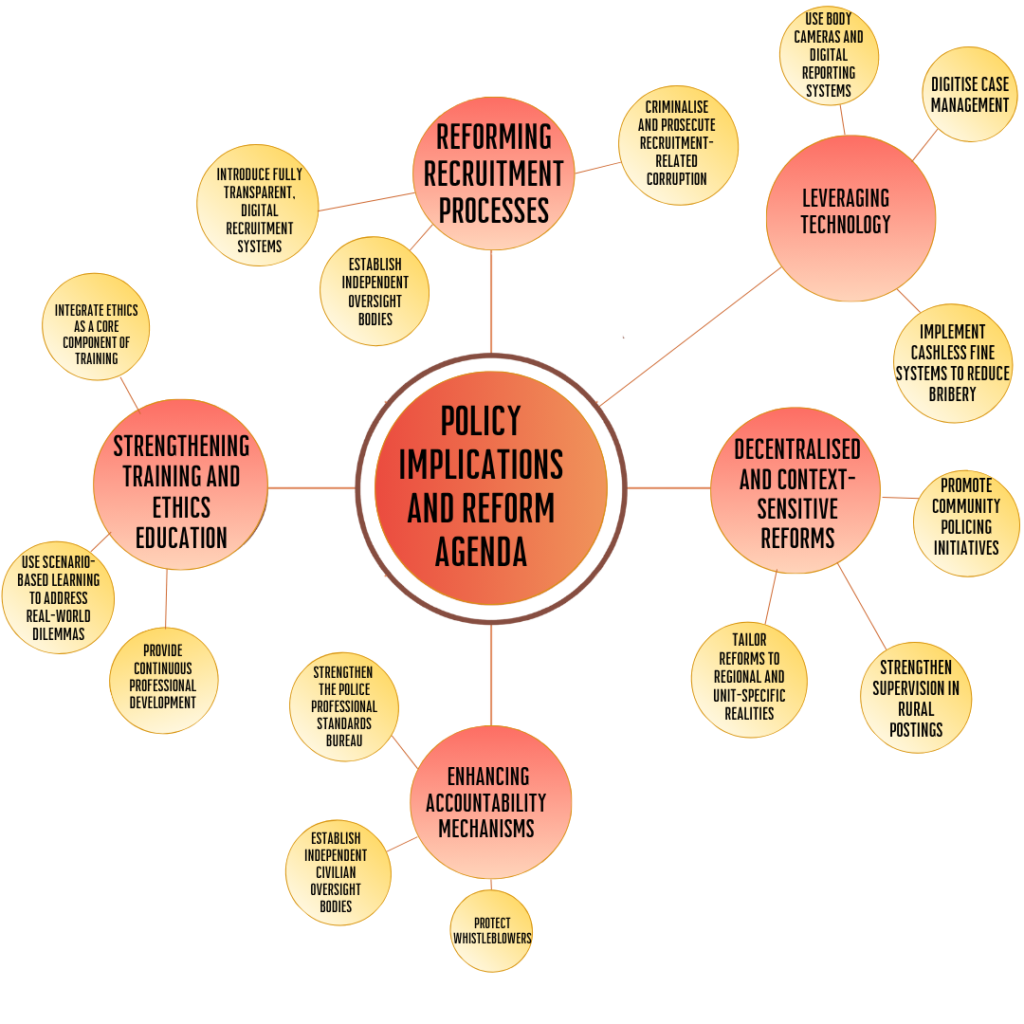
POLICY IMPLICATIONS AND REFORM AGENDA
By tracing their experiences over time, we can see how organisational culture, structural conditions, and societal factors interact to shape attitudes toward corruption. Sustainable reform must therefore go beyond surface-level interventions and address the deeper institutional and contextual drivers of corruption. By focusing on recruitment, training, accountability, and working conditions, Ghana can build a more professional, ethical, and trusted police service.
Ultimately, the quality of policing reflects the health of democracy. Strengthening the Ghana Police Service is not merely a law enforcement issue—it is central to the country’s broader governance and development trajectory.