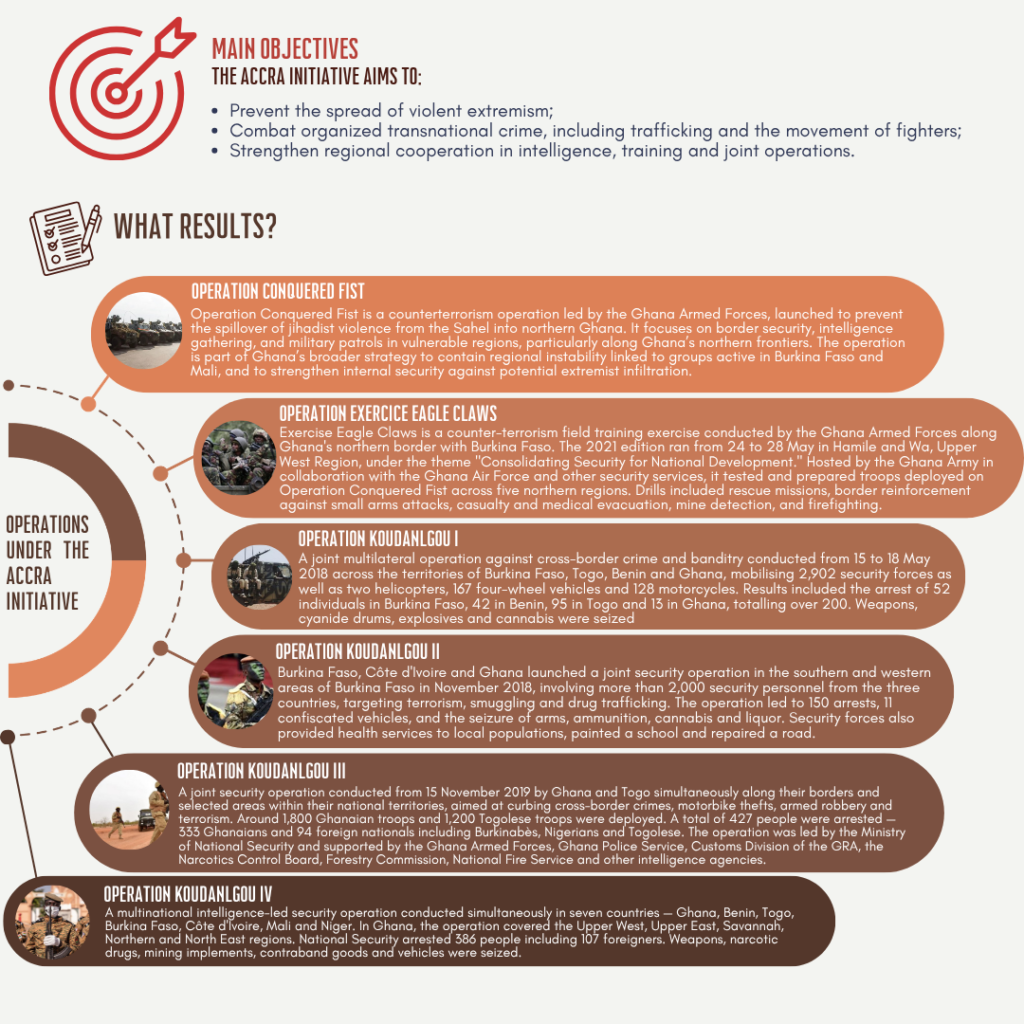
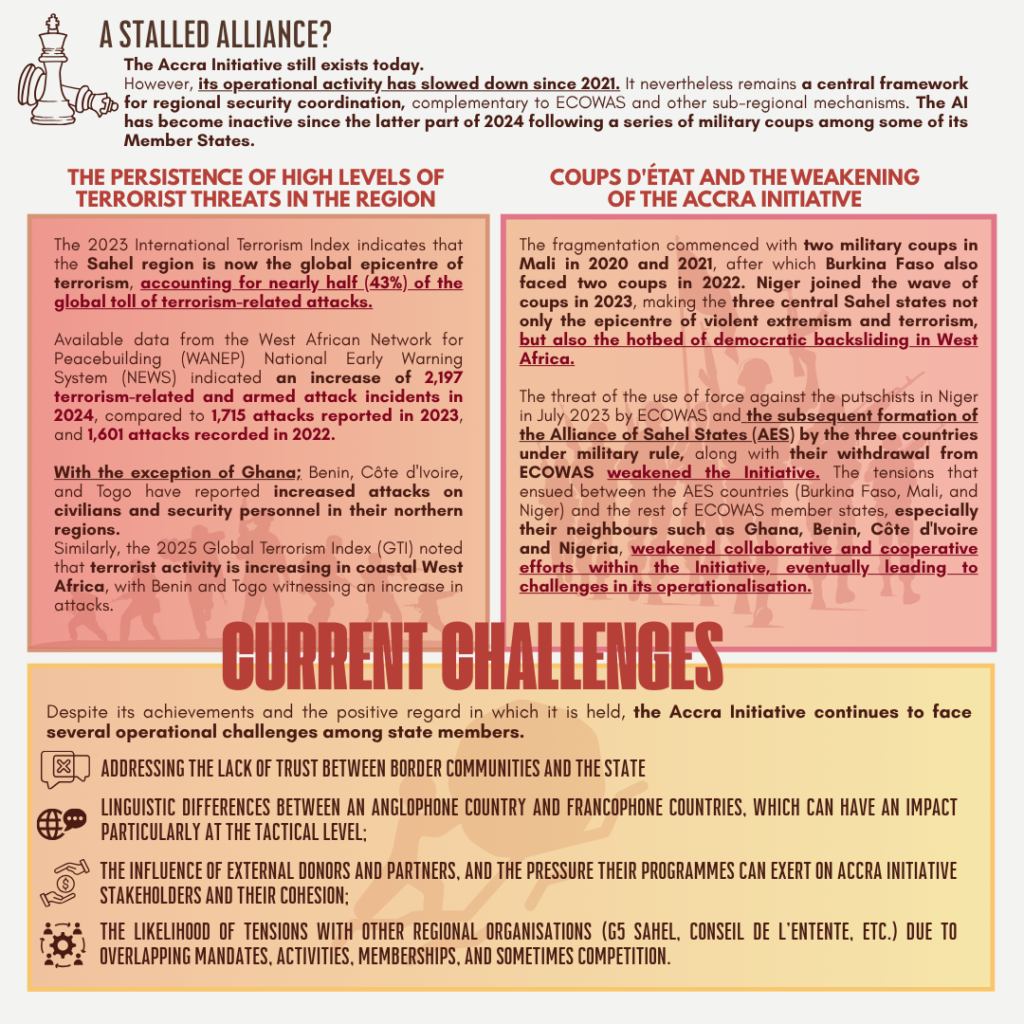
The Accra Initiative demonstrates a sustained collective effort by West Africa’s coastal states to adapt their security responses to an evolving jihadist threat, combining institutional innovation with sub-regional operational coordination. From the establishment of joint border patrols and intelligence-sharing mechanisms, to the deployment of multinational task forces across the territories of Ghana, Burkina Faso, Togo, Benin and Côte d’Ivoire, the Initiative has sought to build a layered defensive architecture against the southward expansion of violent extremism from the Sahel. It has also endeavoured to address the structural enablers of insecurity — weak governance, porous borders and transnational criminal networks — that underpin the threat it was created to contain.
This infographic traces the evolution of the Accra Initiative between 2017 and 2025: its institutional foundations, joint operations conducted under its mandate, the political disruptions triggered by successive military coups across the Sahel, and the structural challenges that continue to constrain its capacity to function as a coherent and effective sub-regional security mechanism.